Charging your car from home would have seemed like a thing of the future 50 years ago, but in the last 10 years there has been a boom in EV chargers for home use. Looking at Zapmaps EV charging statistics for June 2026, there were 121,171 chargers across 46,731 locations around the UK.
But if you are new to electric vehicles and want to save money, what are the best things you can put in place now to make your investment pay itself back fast?
What is an EV Charger?
Even though we think of EV chargers as being a modern device, the very first example of an EV charger dates to 1884 when British inventor Thomas Parker built a simple steam-powered device to push DC electricity into batteries to charge his car.
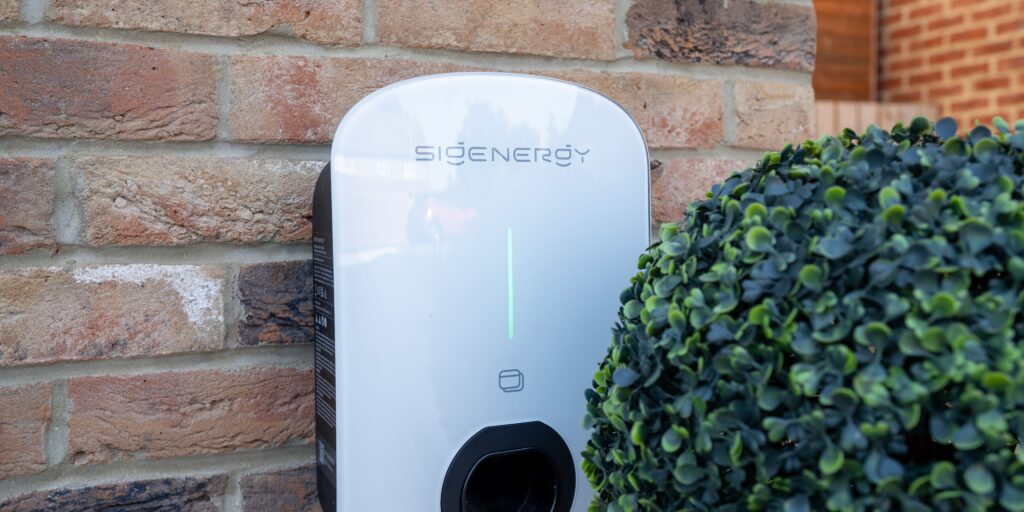
Since then, EV chargers have naturally progressed to become far more advanced, integrating seamlessly into homeowners’ renewable systems. Typically costing £800-£1200 to install, EV chargers deliver around 7kW of power, 3 times as much power as a domestic socket.
There’s an app for that!
So, the charger is already delivering a higher output than domestic sockets, whilst also being stationed at your home – but these installs become even more convenient with smartphone apps. Utilising smart technology, you can remotely start and stop charging via your phone. Within these apps you can also look at when your lowest electricity tariffs are so you can charge your car at the cheapest times of the day. This might mean charging your vehicle overnight so that it is fuelled and ready to go first thing in the morning.
Different brands for different needs
Deciding you want an EV charger is the easy part – choosing from the many, many brands is where it can get tricky. See below some brands that are out there and then the DMH trusted brands that we recommend to our customers.
- Ohme Home Pro – It has a built-in LCD screen for easy direct charger control accompanied by a smart, intuitive app.
- Easee One – A great all-rounder charger, its stylish and simple design is perfect for those homes that have basic requirements.
- Tesla Wall Connector – This system is built for Tesla EV’s but can also work with no Tesla vehicles too. It has a slick design and frequent updates to improve the system; it’s a powerful charger that looks just as good. Unfortunately, some features, such as the remote unlock charge port, are only accessible to Tesla car owners.
DMH Trusted brands include:
- MyEnergy Zappi – Zappi is a popular UK-made charger that integrates with solar PV, letting you power your car with renewable energy. Its easy-to-use app shows how energy is used around the building, making it a great first step into home renewables. Available in 7kW and 22kW, it suits both homes and workplaces.
- Hypervolt – The Hypervolt offers many of the same features as the Zappi, but it is only available in 7kw. It offers up to a 10m cable length for installs where we need to reach more than one location on the driveway, because who wants to be fighting over the only space on the driveway to charge a car?
What do you need to get your EV charger installed?
Fortunately, there are very few requirements you need to get your charger installed. The charger must be installed off-street, usually on your drive or garage; it must be safe to install, being checked to make sure your fuse box can handle the extra power; a strong Wi-Fi connection so that the smart technology can connect to your app for tracking and scheduling charges; and finally, ensuring that your landlord gives you permission for the install (if you are renting).
To improve this install and the sustainability of your home, you can use battery storage to store energy for your charges. At DMH, we are seeing more homes utilise more than one renewable tool, such as having solar PV, battery storage, heat pumps and EV Chargers used to reduce total energy bills – especially given the ongoing energy crisis the UK is facing.
What are the costs vs the ROI?
With initial install costs sitting around £800-£1200 depending on your requirements, the return on investment is an important factor to look at when deciding on installing your EV charger.
Understanding the money you save with a home EV charger versus public chargers helps you make that decision. When charging from a public charger, prices can be between 15-24p per mile, not far from fuelling a petrol car. The standard domestic tariff for charging your vehicle at home, however, is a significant drop of 7p to 10p – even being as low as 2p per mile for overnight EV tariffs.
These figures alone showcase how powerful these devices are and how smart planning can save you a lot of money over the year, making that initial installation fee worth it.
Final tips and tricks
Whilst you now have a better idea of the many ways you can make the most of your home EV charger, here are a few quick note that you can do to really optimise how you use your system.
- Check if your current energy supplier offers any specialised deals for EV tariffs. Suppliers such as Octopus Energy have deals where overnight charging is cheaper.
- By charging your vehicle every time it’s parked at home, you can start scheduling charges, so you never leave the house on an empty tank.
- Try to keep to the 20%-80% charging rule – similar to your own smartphone. Don’t let your vehicle deplete completely before charging but also don’t feel the need to charge it to 100% at all times. Overcharging your vehicle can slowly wear out your battery over time.
Did you find this article useful? At DMH Electrical and Renewables, we pride ourselves on our expert knowledge as well as our bespoke installations of solar PV, battery storage and EV chargers. If you want to learn more about how you can improve your home with renewables, follow us on social media and get in touch if you’re looking to start your renewables journey with us.