In today’s blog, we will take you through one of our latest Sigenergy off-grid new build projects. We will be showcasing the quality craftsmanship, attention to detail, and advanced renewable technology that set our installations apart! We also have a video talking about this project below, so be sure to check that out too!
Initial Site Visit and Panel Installation
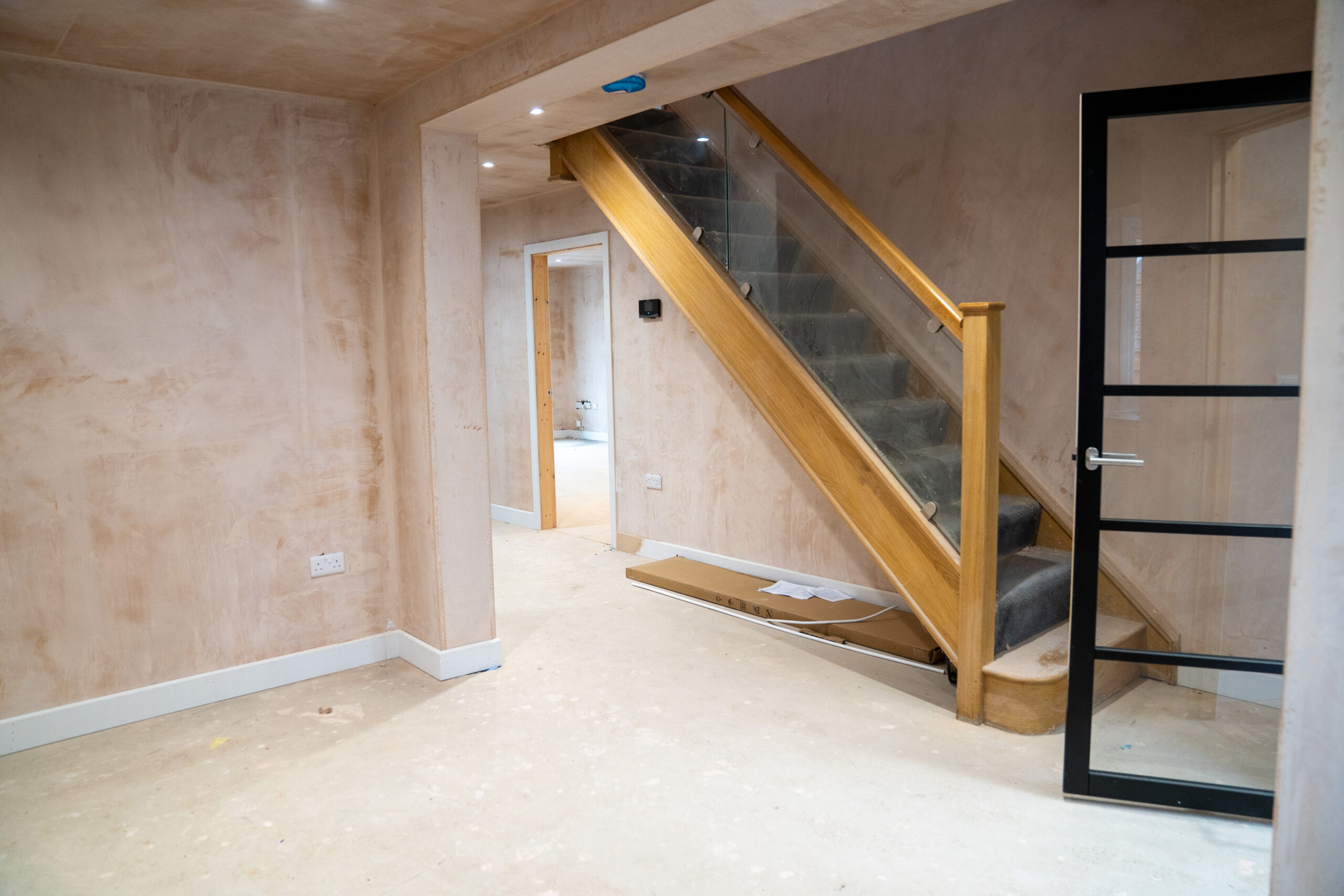
At the start of 2025, Dan and Jay visited the property whilst it was still under construction. When we say “still under construction”, we mean no windows, no doors, and still wrapped in scaffolding. By the end of the job, they had installed 14 Viridian 405W all-black in-roof solar panels. It was essential to install the solar panels on the property at this stage so they could be integrated into the roof structure. This creates a sleek, seamless look, ultimately looking more attractive to potential buyers.
Electrical Intake Setup
The developers asked us to connect the Solar PV temporarily because the property didn’t have a grid connection installed. There were still some finishing touches to the home to be completed, and with the darker nights drawing in, the team of builders needed to have lights on in the property. So how did we help? DMH fitted a single-phase Sigenergy Gateway and connected a 6kW single-phase Sigenergy inverter. This is what allowed us to set up this fantastic off-grid system, converting solar energy into usable electricity for the property. Next, we got around to installing the battery storage. Three 8kWh Sigenergy batteries were installed, totalling 24 kWh of storage. When creating an off-grid system, battery storage is crucial. It ensures that energy is available during low sunlight periods and overnight. The aim of this project, however, was to provide enough power to keep the lights on for decorators and to power basic tools during construction until the mains grid could be connected.
Battery Storage Installation
Next, we got around to installing our battery storage. Three 8kWh SIG Energy batteries were installed, totalling 24 kWh of storage. When creating an off-grid living system, battery storage is crucial. It ensures that energy is available during low sunlight periods and overnight. The aim of this project, however, was to provide enough power to keep the lights on for decorators and to power basic tools during construction.
System Monitoring and Connectivity
But how do our clients know if their system is working as it should? In addition to the lights being on, the system is connected to the cloud and can be monitored remotely in the Sigenergy app. However, because the property is still under construction, it has been connected not via the home’s Wi-Fi but through a data stick, providing the system with 4G connectivity. This will remain operational even when the system is connected to Wi-Fi in the future, serving as a redundant backup for connecting to the outside world and the remote monitoring app.
Functional Testing
Before we leave the site in the hands of the builders and on-site electrician, we need to ensure that everything is working as it should. Ensuring that the DC cabling from the panels had been tested and that the voltage from the inverter was correct.
What Next?
At this point in the project, we were pretty much finished with our part for now. From here, we can wait for Northern Power Grid to install the meter. DMH Electrical and Renewable can then return to the site and grid-tie the system. This offers flexibility, with the system drawing from the grid when needed, whilst exporting excess energy back! This project was certainly unique, as we were working on a property that isn’t even completed yet. If you want to get a better idea of how we completed this job, then make sure to check out the video in this blog or visit our YouTube channel, where we have more projects we’ve recently worked on. If you’re looking to reduce your dependency on the grid, then get in touch to chat more about how we can help.